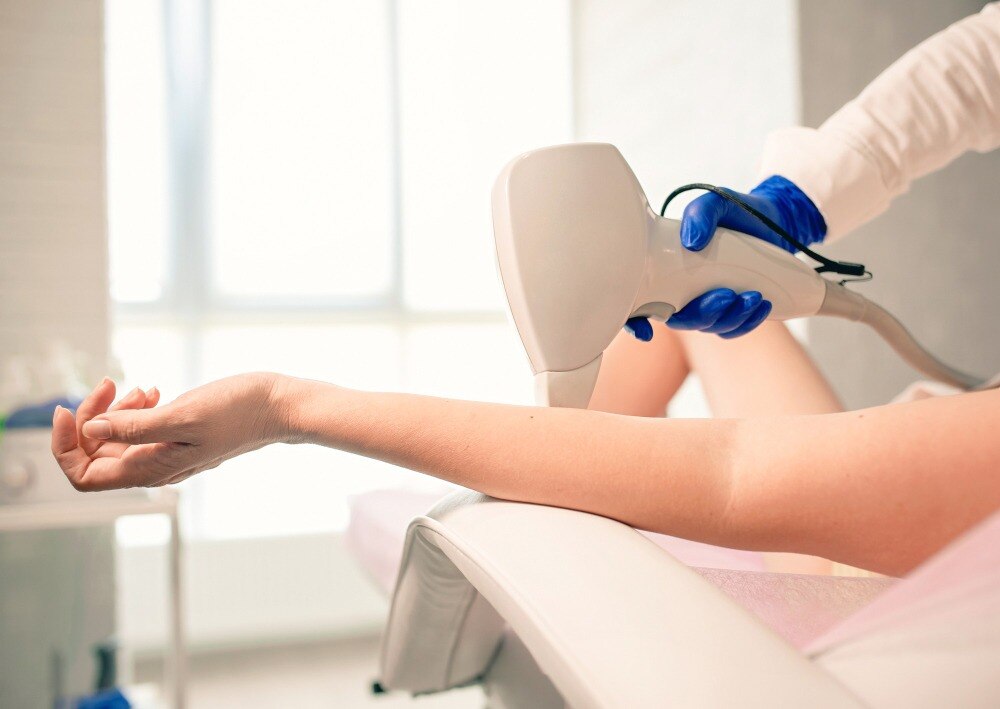
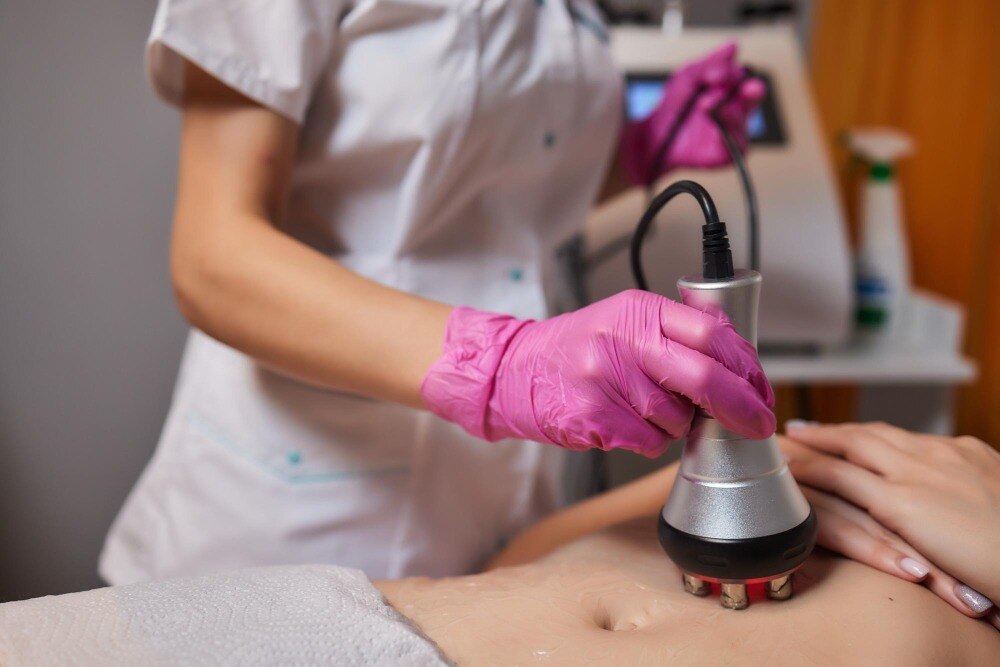
The right treatment depends on whether you have a discrete, pinchable fat pocket, loose skin, cellulite, weak muscle tone, or overall weight to lose. By matching the problem to the body area, tissue depth, and treatment limits, you can compare realistic options and avoid choosing a fat-reduction service for a condition it cannot correct.
Key takeaways
- Separate pinchable fat from loose skin before choosing treatment.
- Body contouring does not reduce visceral fat or replace overall weight loss.
- Stable weight improves results for non-surgical contouring.
- Ask whether muscle separation or hernia needs medical assessment first.
Start with the problem: localised fat, loose skin, or overall weight
Start by identifying what creates the shape: a pinchable fat pocket, loose skin, separated abdominal muscles, or overall weight. Body contouring services suit localised fat reduction or mild-to-moderate laxity when your weight is near stable; they do not replace overall weight loss or provide visceral fat reduction.
A firm, enlarged abdomen driven mainly by internal fat will respond poorly to surface devices.
Check these signs before choosing a service:
- A discrete, soft bulge with skin that springs back points toward non-surgical fat reduction or liposuction.
- Hanging or folded skin, especially after major weight loss, needs a skin-removal discussion; a device cannot tighten away a substantial fold.
- A lower-abdominal pouch with muscle separation may require abdominoplasty, which repairs the abdominal wall and removes skin but leaves a scar and is not weight-loss surgery.
- A relatively firm upper arm with fat and good recoil may suit liposuction; a pendulous arm usually needs brachioplasty.
- A buttock concern must be labelled as excess fat, volume loss, cellulite, or laxity before treatment. Muscle stimulation can improve tone, not remove skin.
| Problem | Possible direction | Key limitation |
|---|---|---|
| Pinchable fat bulge | Cryolipolysis, laser lipolysis, or liposuction | Does not treat visceral fat or obesity |
| Diffuse weight gain | Nutrition and medically supervised weight management | Contouring alone will not produce overall weight loss |
| Loose skin | Skin-tightening assessment or surgery | Fat reduction will not remove hanging skin |
| Muscle separation | Surgical abdominal-wall repair | External devices cannot close the separation |
Which services fit the abdomen, flanks, back, arms, and thighs?
Abdomen body contouring and flank fat reduction are the most common uses for noninvasive fat-reduction devices. They work best on a stable-weight person with a distinct, pinchable subcutaneous fat pocket, not a large abdomen caused mainly by visceral fat or loose hanging skin.
| Area | Commonly considered services | What to expect |
|---|---|---|
| Abdomen and flanks | Cryolipolysis, ultrasonic cavitation, diode laser lipolysis, slimming packages | Cryolipolysis freezes a defined fat fold; cavitation and diode laser treatments usually require several visits and offer gradual, modest contour change. |
| Back and bra-line | Cryolipolysis or device-specific cavitation and laser treatments | Treatment depends on applicator shape, fat thickness, and intact skin. Expect reduction of a fold, not removal of broad excess skin. |
| Upper arms | Cryolipolysis, diode laser lipolysis, or a slimming package | A small fat pocket may improve; loose skin can remain, and device clearance for the abdomen does not automatically cover the arms. |
| Thighs | Cryolipolysis, ultrasonic cavitation, diode laser lipolysis, or slimming packages | Outer-thigh fat is usually easier to target than inner-thigh laxity. A thigh lift removes excess skin; external devices do not. |
Slimming packages often combine measurements, nutrition guidance, and repeated sessions. They support circumference reduction rather than overall weight loss and do not remove visceral fat.
Ask which body area the specific device is cleared for, how much fat must be pinchable, and how many visits are planned. Avoid cryolipolysis over a hernia or with cryoglobulinemia, cold agglutinin disease, or paroxysmal cold hemoglobinuria.
How should buttocks, cellulite, and muscle laxity be treated?
A buttocks reduction treatment is not one standard procedure; the right choice depends on whether you want less volume, smoother skin, a lifted appearance, or stronger-looking muscles. Localised pinchable fat on the buttocks or around the saddlebags can be reduced or reshaped. These procedures do not remove visceral fat or treat obesity.
Use this decision map:
- Excess fat: Select a localised fat-reduction method when the buttocks or saddlebags contain a stable, pinchable pocket. Removing too much fat can create hollows, waviness, or asymmetry.
- Cellulite: Choose a cellulite treatment for dimpling caused by fibrous connective-tissue bands and skin structure. Fat reduction alone can leave cellulite unchanged; improvement is more realistic than permanent elimination.
- Muscle laxity: Muscle stimulation body contouring can trigger repeated contractions and improve muscle tone or buttock appearance. It does not remove loose skin or reposition tissue like a surgical lift.
- Lost volume or hanging skin: Fat reduction is the wrong goal. A clinician must assess whether volume restoration or skin-removal surgery fits better.
A Brazilian butt lift is a surgical fat-transfer procedure, not a routine device treatment. It carries serious fat-embolism risks and requires a qualified surgeon, careful fat-placement technique, and specialist safety protocols. Book assessment before treating an area with pain, unexplained swelling, poor skin quality, or uncertain muscle weakness.
What about the chin, neck, breasts, calves, knees, hands, and intimate areas?
Under-chin fullness is not always a fat problem. Double chin treatment must distinguish submental fat from loose skin, platysma bands, or a recessed chin; removing fat alone can leave the neck looking looser.
| Area | Better-matched option | When external fat reduction is the wrong choice |
|---|---|---|
| Chin and neck | Deoxycholic acid injection, liposuction, or a neck lift | In the United States, deoxycholic acid is approved for moderate-to-severe submental fat in adults, not general body fat. Swelling, bruising, swallowing difficulty, and temporary jaw-nerve weakness are possible. |
| Breasts | Breast reduction, lift, augmentation, or surgery-led reshaping | External devices do not reliably reshape breast tissue or correct marked drooping. |
| Calves | Medical assessment before contouring | Fullness can come from muscle, swelling, veins, or fat; treating the wrong cause can worsen the problem. |
| Knees and hands | Small-area fat treatment or skin tightening treatment | Thin, lax skin or minimal pinchable fat favours tightening or surgical advice, not aggressive fat removal. |
| Intimate areas | Specialist assessment and, when indicated, surgery or tissue-tightening treatment | Do not apply unapproved energy or fat-reduction devices to genital tissue. |
Neck contouring with radiofrequency or infrared heating suits modest laxity, not a large fat pocket. Heat-based devices can cause burns, pigment changes, pain, or nerve injury, and implanted electronics or metal hardware require screening.
Liposuction offers the most direct sculpting but does not treat obesity, visceral fat, or substantial loose skin. Choose a clinician who can identify whether the target is fat, skin, muscle, glandular tissue, or swelling before recommending injections, devices, or surgery.
What does a proper body-contouring consultation check?
A proper body-contouring consultation checks the area, the tissue, your medical history, and the result you want before anyone recommends a device. The aim is to separate a pinchable, localised fat pocket from visceral fat, loose skin, muscle separation, or a hernia; surface treatments will not solve those problems equally.
- Medical history screening: disclose pregnancy or plans for pregnancy, breastfeeding, diabetes, circulation problems, neuropathy, liver or kidney disease, recent surgery, medicines, implants, and previous procedures. Pregnancy and body contouring require postponing elective treatment; do not accept a “mild” device as an exception.
- Hernia screening: the clinician examines the abdomen and asks about a bulge, pain, or previous hernia repair. Do not treat over a known or suspected hernia.
- Cold-sensitivity screening: cryolipolysis is unsuitable or needs specialist review with cryoglobulinemia, cold agglutinin disease, or paroxysmal cold hemoglobinuria.
- Tissue and area assessment: check skin integrity, thickness of pinchable fat, recoil, scars, numbness, muscle separation, and whether the device is cleared for that body area. A hanging arm or thigh may need skin-removal surgery, not more fat reduction.
- Goal and weight assessment: confirm whether you want centimetre reduction, improved laxity, or overall weight management. A stable weight supports contouring; obesity and major future weight changes call for a different plan.
At Dr. Richa's Unique Clinic (Call : 08048034690), this consultation can match your history and target—such as noninvasive treatment for a suitable fat pocket or surgical referral for substantial loose skin—to a realistic number of visits, risks, and expected change.
Related items
ULTRASONIC CAVITATION Ultrasonic cavitation is a safe, non-surgical way to target stubborn fat and improve your body's shape. View service → |
Buttocks Reduction Treatment Product Details: Minimum Order Quantity 1 onwards Applicable Age Group 20-30 years, 30-40 years, 40-50 years, >50 years Laser Lipolysis is a new... |
Frequently asked questions
Which body-contouring service suits the abdomen?
The right option depends on the cause of fullness. Localised pinchable fat can suit non-surgical fat reduction, while loose skin or significant muscle separation requires a surgical assessment. Body contouring does not reduce visceral fat.
Can body contouring treat the flanks, back, arms, and thighs?
These areas can be assessed for localised fat, loose skin, or cellulite. Treatment choice depends on the amount of tissue, skin elasticity, symmetry, and whether your weight is stable.
How are buttocks and cellulite treated?
Buttock treatment must distinguish volume loss, excess fat, skin laxity, and muscle weakness. Cellulite requires a separate assessment because reducing fat alone does not remove the fibrous bands that create dimpling.
Can body contouring improve muscle laxity?
Non-surgical contouring does not repair separated abdominal muscles. Muscle weakness or diastasis recti needs clinical evaluation, and exercise, physiotherapy, or surgery may be more appropriate.
Can the chin, neck, knees, calves, hands, breasts, or intimate areas be treated?
Some areas are suitable for carefully selected fat reduction or skin-tightening treatments, but anatomy and safety limits differ. A consultation must check tissue thickness, skin quality, nerves, blood vessels, and the treatment’s approved use.
Related items
CRYOLIPOLYSIS Sculpt your ideal silhouette with cryolipolysis. This innovative treatment helps diminish stubborn fat pockets that resist diet and exercise, leaving... View service → |
Pearly Diode Or Lipolysis Package Product Details: Minimum Order Quantity 1 Person Gender Female Preferred Location Service Centre Laser lipo offers a noninvasive treatment for fat,... |
Given the fast-paced lifestyle that we live, there are a lot of weight issues faced by an individual. View product → |
Spacial Unique Gold Weight Loss Package Spacial Unique Gold Package Applicable Age Group: 20-50 years Target Weight Loss : Up To 8-10 Kg Inch Loss: Up To 30-40 Cm 10 German Sitting 5... |
Keywords