Suitability depends on more than the amount of hair missing from the scalp. You need a confirmed cause of loss, a stable and adequate donor supply, realistic coverage goals, and medical conditions that allow safe healing; by the end, you can identify the evidence a proper consultation should examine before you agree to surgery.
Key takeaways
- Confirm the cause of hair loss before considering transplantation.
- Check whether your donor area has enough stable hair for coverage.
- Set hairline and density goals that match your available grafts.
- Review surgery risks and native-hair protection with a qualified doctor.
Is Your Hair Loss Diagnosis Suitable for Transplantation?
Hair transplant candidacy depends on a confirmed diagnosis and stable disease, not hair loss alone. Androgenetic alopecia is the usual indication because resistant donor follicles can continue growing after relocation.
Alopecia areata, telogen effluvium, traction alopecia, inflammatory disease, scarring alopecia, and unexplained shedding need diagnosis and treatment first; transplanted follicles can fail if the underlying process remains active.
Your consultation should follow these steps:
- Have the entire scalp and donor area examined for rapid progression, pain, itching, redness, scaling, pustules, broken hairs, or shiny scarred skin. These signs can indicate infection, inflammation, or follicle destruction.
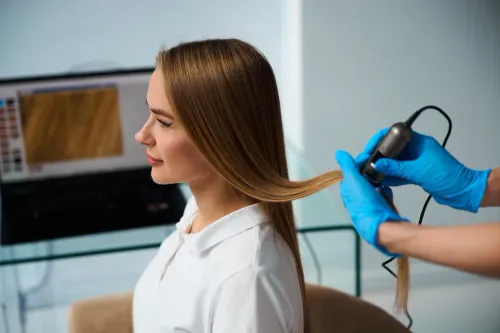
- Provide your medical and medication history, family pattern, shedding timeline, and photographs taken in consistent lighting. Trichoscopy can reveal miniaturisation, inflammation, and scarring that a routine visual check misses.
- Request blood tests when diffuse thinning is present. Women with donor-area thinning need evaluation for iron deficiency, thyroid disease, hyperandrogenism, telogen effluvium, and diffuse alopecia before surgery.
- Ask whether a scalp biopsy is needed when the pattern is unusual or scarring is suspected. A scarring alopecia diagnosis and treatment before transplant take priority because scarred skin can destroy newly placed follicles.
The deciding question is whether the cause is identified, medically controlled, and unlikely to damage transplanted or native hair. Active alopecia areata, infection, or inflammatory and scarring disease usually means postponing surgery until treatment establishes stability.
Does Your Donor Area Have Enough Stable Hair?
Usable donor supply—not the size of the bald area—sets the limit. Examine donor hair density across the occipital and temporal donor zones, follicular-unit size, hair-calibre variation, curl pattern, scalp quality, and miniaturisation. Fine, straight hair gives less visual coverage per graft, while tightly curled follicles can curve beneath the skin and complicate extraction.
These factors do not automatically exclude you, but they change planning and technique.
A clinician should confirm that harvesting will stay within a genuinely stable safe donor area:
- Hair at the sides or lower back can also miniaturise in progressive androgenetic alopecia. Harvesting beyond the safe donor area can create visible depletion and reduce options for later procedures.
- Diffuse thinning throughout the donor zone, particularly in women, may leave too few resistant follicles. Investigate iron deficiency, thyroid disease, hyperandrogenism, and telogen effluvium before considering surgery.
- Scalp laxity matters when strip surgery is being considered; limited laxity can restrict the strip size and increase tension on the closure.
- Assess lifetime supply, not just today’s appearance. Untreated native hair can continue to thin after transplantation.
| Method | Main donor trade-off | What to understand |
|---|---|---|
| FUE | Multiple small scars and overharvesting risk | Curved follicles and low density can make extraction harder |
| FUT | One linear scar | Can preserve useful follicular units for selected patients needing larger sessions |
| Neither | Does not remove donor limits | A procedure cannot create follicles or guarantee future stability |
Are Your Timing, Hairline, and Coverage Goals Realistic?
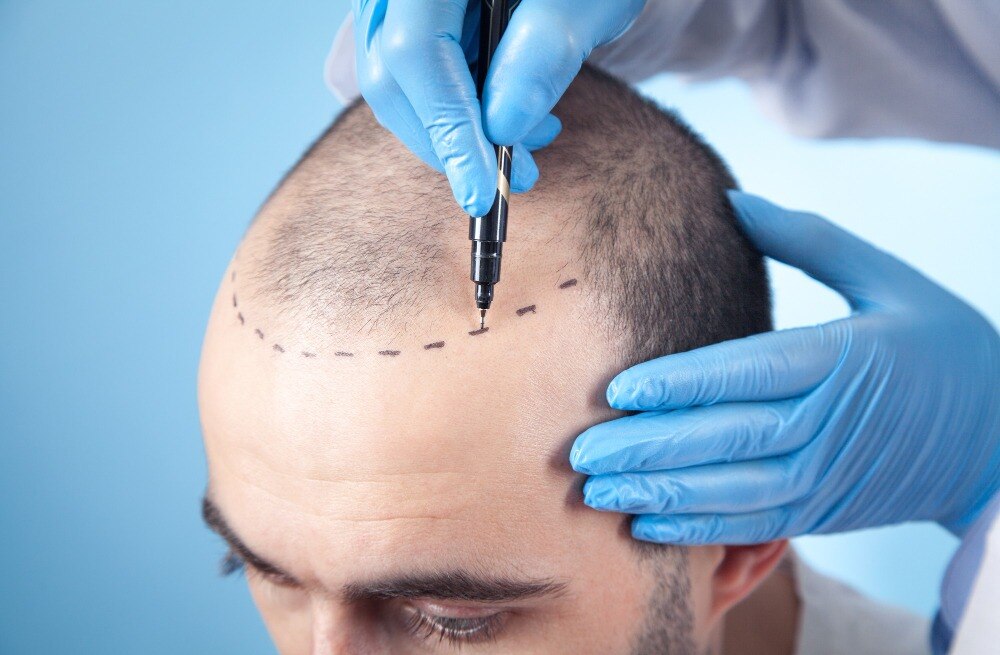
A realistic plan matches your age, pattern maturity, recipient area, and finite graft supply—not simply the amount of scalp you want covered. Age alone does not decide candidacy, but a rapidly changing hairline in a young person makes accurate hairline design difficult.
A low, dense hairline can consume donor follicles and look unnatural if native hair later recedes. A conservative hairline protects graft limits and leaves options for future loss.
Ask the plan to separate these goals:
- Frontal framing, which shapes the face
- Frontal density, which determines how thick the front appears
- Crown coverage, which can require substantial graft numbers
- Diffuse thinning, which spreads grafts across a wider area
- Eyebrow restoration, which uses grafts for a different angle and placement pattern
A transplant cannot normally recreate adolescent density across a large bald area. Surgeons often prioritise the frontal scalp because it frames the face, while crown coverage or a later stage receives fewer grafts.
Your written plan should state:
- The estimated graft range
- Whether a staged hair transplant is likely
- How overharvesting will be avoided
- How untreated native hair will be managed
Hair contrast, calibre, curl, and hairstyle change the apparent fullness of the same graft count. Fine, straight hair often shows less coverage, while curly hair can create greater visual fullness but requires careful extraction planning. Progress photographs and a conservative design help test whether the proposed result will still look balanced as loss continues.
Can You Safely Undergo Surgery and Protect Native Hair?
Medical clearance is needed when bleeding, healing, or scalp inflammation could make elective surgery unsafe or damage grafts. Hair transplant medical screening should review anticoagulants, antiplatelet drugs, bleeding disorders, uncontrolled diabetes or hypertension, immunosuppression, smoking, poor wound healing, keloid or hypertrophic scars, and medicines affecting bleeding or tissue repair.
Do not stop a prescribed anticoagulant without instructions from its prescribing clinician.
Active folliculitis, infection, psoriasis with substantial inflammation, uncontrolled seborrheic dermatitis, inflammatory alopecia, or scarring alopecia requires treatment and control before surgery. Operating through active disease can impair healing, increase inflammation, or destroy grafts.
| Finding | Why it matters | What to discuss |
|---|---|---|
| Bleeding or healing risk | Increases bruising, wound, and graft-healing problems | Medication review, diabetes and blood-pressure control, and treating-clinician coordination |
| Keloid risk | Can produce raised scars at extraction or incision sites | Previous scars, family history, and whether surgery is appropriate |
| Active scalp disease | Can interfere with healing or cause graft loss | Diagnosis, treatment response, and disease control |
| Ongoing native-hair loss | Does not stop transplanted hair from miniaturising elsewhere | Long-term treatment and monitoring |
Ask whether minoxidil, finasteride, dutasteride, or another treatment suits you. Discuss contraindications, sexual, mood, reproductive, and other side effects, pregnancy or pregnancy planning, and treatment duration. Finasteride, minoxidil, and other hair-loss management can stabilise native hair before or after surgery; untreated recession can undermine the result.
What Should a Proper Candidacy Consultation Show You?
A proper consultation leaves you with evidence, not a promised procedure. The clinician should examine your entire scalp and donor area, record photographs, review illnesses and medicines, and perform trichoscopy when the pattern is unusual, rapidly changing, inflamed, or diffuse.
Use this hair transplant consultation checklist:
- Request a donor density measurement in the occipital and temporal zones, including miniaturisation, follicular-unit characteristics, and the expected stable donor area.
- Ask which diagnosis supports transplantation and whether reversible causes, such as iron deficiency, thyroid disease, hyperandrogenism, or telogen effluvium, need investigation.
- Ask how many grafts are usable, which area receives priority, and what happens if native hair continues to recede.
- Require a plan showing the proposed hairline, realistic density, possible stages, method-specific scars, and the risk of donor overharvesting.
A documented plan should distinguish an appropriate recommendation from a sales promise:
| Evidence in the consultation | What it tells you | Warning sign |
|---|---|---|
| Measured donor supply | How many grafts can be used safely | A fixed graft promise without measurement |
| Stable diagnosis and donor zone | Whether surgery has a sound basis | Active inflammation or unexplained shedding |
| Lifetime plan | How future loss and further stages will be managed | No hair transplant lifetime planning |
Hair calibre, curl, skin contrast, and hairstyle affect visible coverage, so adolescent density is not a realistic promise across extensive baldness. Search results for hair transplant clinic Nagpur are not proof of assessment; Dr. Richa's Unique Clinic can be one place to take these questions for a clinician-led review, at 08048034690.
Related products
 | Hair Transplantation is a surgical technique that involves moving individual hair follicles from one part of the body (the donor site) to bald or... View product → |
 | HAIR TRANSPLANTATION Hair Transplant also called as hair restoration or hair implantation, is a procedure that permanently restores hair by transplanting new follicles... View product → |
Frequently asked questions
Which hair loss diagnoses are suitable for transplantation?
Androgenetic alopecia is the usual indication because resistant donor follicles can continue growing after relocation. A confirmed diagnosis and stable disease are important before surgery.
How does the donor area affect hair transplant candidacy?
The donor area must contain enough stable hair to supply grafts without creating visible thinning. A consultation should assess donor density, hair calibre, scalp characteristics, and the expected pattern of future loss.
What makes hair transplant goals realistic?
Realistic goals account for available grafts, donor supply, future hair loss, age, hairline design, and the coverage or density that surgery can achieve.
What should a hair transplant consultation include?
A proper consultation should confirm the diagnosis, examine the donor and recipient areas, review medical history and medicines, discuss risks, explain native-hair protection, and show a practical treatment plan.
Related product
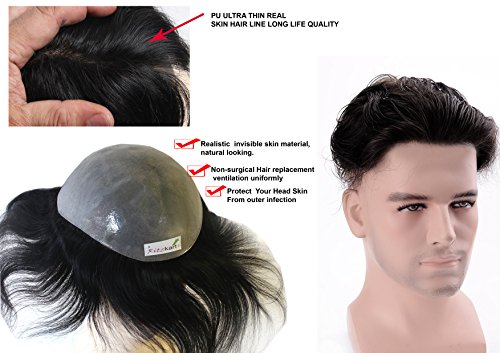 | Non-Surgical Hair REplacement As medical treatments for alopecia improve and develop, it should come as no surprise to see that other options are becoming more technically... View product → |