Chemical peels can improve several surface-level concerns, but the likely benefit depends on the type of pigmentation, scar, texture change or line being treated. By the end, you will be able to match common concerns with suitable peel depths and acids, recognise limits and risks, and understand the time required for treatment and recovery.
Key takeaways
- Peels can improve surface pigmentation, rough texture, mild acne, fine lines and uneven tone.
- Peel depth and acid choice determine whether treatment targets comedones, pigmentation or texture.
- Identify the cause of pigmentation or scarring before choosing a peel.
- Expect temporary stinging, tightness, peeling or redness after treatment.
Which skin concerns can a chemical peel visibly improve?
Chemical peels are commonly considered for concerns close to the skin’s surface: colour, smoothness and visibility. They can improve post-inflammatory hyperpigmentation left by healed acne or irritation, selected melasma and sun-related pigmentation, uneven skin tone, dullness, rough skin texture, enlarged-looking pores, fine lines, mild acne and comedones.
| Concern | Likely visible improvement | Important limit |
|---|---|---|
| Post-inflammatory hyperpigmentation | Lighter, more even colour after healed acne or irritation | Dark marks can return if inflammation or ultraviolet exposure continues |
| Melasma or sun pigmentation | Reduced patchiness and a brighter, more uniform tone | Melasma often recurs and irritation can worsen it |
| Dullness or rough texture | Smoother surface and improved radiance | It does not reverse pronounced laxity or deep wrinkles |
| Pores, mild acne or comedones | Less congested-looking pores and fewer surface lesions | A peel does not remove the tendency to develop acne |
| Fine lines | Softer appearance of superficial lines | Deep wrinkles need additional treatment |
| Superficial rolling or boxcar scars | Reduced contrast and smoother-looking shallow depressions | It does not completely remove established scarring |
Deep rolling scars, ice-pick scars and raised keloid scars usually need other or additional procedures. Severe cystic acne also requires medical acne treatment rather than a peel alone, while pronounced laxity and deep wrinkles need different approaches. A peel improves appearance; it does not erase the underlying cause.
How do peel depth and acid choice change the treatment target?
Peel depth determines whether treatment stays in the epidermis or reaches the dermis, so it changes both the target concern and recovery. A superficial chemical peel suits surface dullness, mild uneven pigmentation, oily skin, comedones and mild acne. It improves the surface; it does not remove the tendency to develop acne.
| Peel type | Main concerns | Depth and practical meaning |
|---|---|---|
| Salicylic acid | Oiliness, clogged pores and acne | Superficial; oil-soluble and useful in acne-prone skin |
| Glycolic acid | Rough texture, dullness, fine lines and some pigmentation | Superficial; stronger exfoliation can increase irritation |
| Lactic acid | Uneven tone and mild surface dullness | Superficial; gentler exfoliation |
| Mandelic acid | Acne or pigmentation | Superficial; slower penetration can suit sensitive or darker skin |
| Trichloroacetic acid | Selected sun damage, fine lines and persistent surface irregularity | Medium-depth; reaches the papillary dermis |
A medium-depth peel can produce a more substantial change than a superficial peel, but it also brings more swelling, crusting and recovery. It requires medical selection based on your diagnosis, skin type and pigment risk.
Deep peels reach further into the dermis and are not routine cosmetic treatments. The greater intensity raises the risks of infection, scarring, pigment change and prolonged recovery, especially with phenol or high-strength trichloroacetic acid. Use them only after strict assessment by an appropriately trained medical professional.
How is the cause of pigmentation or scarring assessed before a peel?
The same brown patch does not automatically receive the same peel because its cause, depth and safety risks may differ. A clinician first determines whether it is post-inflammatory hyperpigmentation after acne or irritation, melasma influenced by hormones and light, an epidermal sun spot, or another diagnosis.
1. Examine the mark and surrounding skin. A changing, bleeding or uncertain pigmented lesion needs medical assessment and, when appropriate, a biopsy instead of cosmetic peeling. For scarring, the clinician checks whether the unevenness is mainly leftover pigment, superficial rolling or boxcar scarring, or a deeper scar that a peel will not safely remove.
2. Review Fitzpatrick skin type, recent tanning, active acne, dermatitis, infection, wound-healing problems and any previous reaction to procedures. Darker skin types can receive selected peels, but conservative strength, suitable preparation and strict broad-spectrum sunscreen reduce post-inflammatory hyperpigmentation risk and hypopigmentation.
3. Check medicines and products. Tell the clinician about recent isotretinoin use, photosensitising medicines, retinoids, exfoliating acids and irritating skincare. Continuing irritating products can turn a controlled peel into prolonged inflammation and worsen pigmentation.
4. Ask about recurrent herpes labialis. Facial peeling can reactivate herpes simplex; active herpes or inflamed skin requires postponement, and antiviral planning may be appropriate before treatment.
Melasma often needs photoprotection and topical treatment alongside a peel. An overly aggressive peel can intensify melasma or trigger post-inflammatory hyperpigmentation, so diagnosis guides the agent, strength and preparation rather than the colour of the patch alone.
What happens during a peel, and what will your skin feel like afterward?
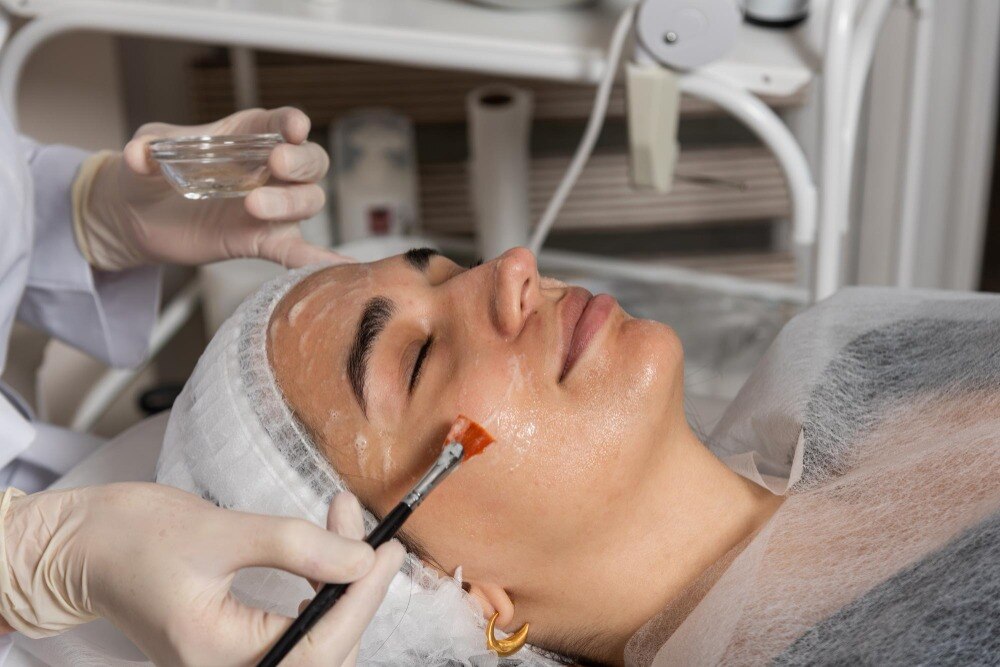
During the chemical peel procedure, the clinician cleanses and degreases your skin, then protects sensitive areas such as the lips, nostrils and eye corners. The solution is applied in controlled passes while contact time and skin response are observed. The formula is neutralised when required, followed by cooling and post-treatment protection.
| Depth | What you may feel | Visible recovery |
|---|---|---|
| Superficial | Tingling, warmth or brief stinging | Redness, tightness, dryness and skin flaking for several days |
| Medium-depth | Stronger stinging, warmth or discomfort | More swelling and crusting, with roughly 7–14 days of visible recovery |
| Deeper treatment | More intense irritation and tenderness | Longer healing and greater risks, requiring strict medical supervision |
Afterward, redness can give way to tightness, dryness and scaling. Temporary hyperpigmentation can develop when inflammation stimulates pigment, particularly if you pick, scratch or remove peeling skin. Let flakes shed naturally; pulling them off can cause wounds, infection or darker marks.
Follow the treating clinician’s peeling aftercare instructions. Pause retinoids, exfoliating acids, scrubs or other irritating products only when the clinician tells you to, and restart them on the advised schedule. Apply a broad-spectrum sunscreen every day, limit direct sun and use gentle cleansing and moisturising.
Sunscreen and aftercare are part of the treatment, not optional extras.
How many treatments are needed, and when is a peel the right choice?
One peel can be enough to review mild dullness or superficial pigmentation, but it cannot guarantee a result. Acne, melasma, rough texture and superficial scars often need several chemical peel sessions, with treatment spacing set by the acid, concentration, application depth, skin response and recovery.
- Consider a peel when the concern is surface-level and you can complete the recovery period.
- Expect a series when treating recurring acne, persistent melasma, uneven texture or shallow rolling or boxcar scars.
- Plan maintenance when acne, ultraviolet exposure or melasma triggers continue after the initial improvement.
- Use daily broad-spectrum sun protection, because pigment can return after treatment even when the peel initially lightens it.
A peel is a poor match for deep wrinkles, significant laxity, deep ice-pick or tethered scars, raised keloid scars and severe cystic acne. These concerns may need prescription care, microneedling, subcision, laser treatment or another medically selected combination instead of repeated peels.
A peel also reduces acne lesions; it does not remove the tendency to develop acne.
A consultation at Dr. Richa's Unique Clinic can help diagnose the concern, compare peel depth with acne scar treatment options, and plan aftercare around your skin type and schedule; call 08048034690.
Related items
ACNE ACNE TREATMENTS Acne is a common skin condition caused by oil (sebum) and dead skin cells clogging hair follicles. View service → |
Skin Peeling Treatment A chemical peel is a technique used to improve and smooth the texture of the skin. |
Frequently asked questions
Which skin concerns can a chemical peel visibly improve?
Chemical peels can improve post-inflammatory hyperpigmentation, selected melasma, sun-related pigmentation, uneven tone, dullness, rough texture, enlarged-looking pores, fine lines, mild acne and comedones.
How do peel depth and acid choice change the treatment target?
The peel depth determines how far into the skin the treatment works, while the acid influences its target. Superficial peels are used for surface tone, texture, comedones and mild acne; stronger peels require more recovery and careful assessment.
How is the cause of pigmentation or scarring assessed before a peel?
A clinician reviews your history, examines the colour and pattern of the marks, checks for active acne or irritation, and distinguishes pigmentation from textural scarring before recommending a peel.
What happens during a chemical peel, and what will skin feel like afterward?
The skin is cleansed, the peel is applied for a controlled period, and it is removed or neutralised when required. You may feel tingling, warmth or stinging, followed by tightness, redness, dryness or peeling.
How many chemical peel treatments are needed, and when is a peel the right choice?
The number of treatments depends on the concern, peel strength, skin response and aftercare. A peel suits surface colour, texture and mild acne concerns; deeper scars, active skin disease or poorly controlled pigmentation may need another approach first.
Related service
ADVANCED SKIN PEELS Reveal a brighter, more youthful you with an advanced chemical peel! This powerful treatment goes beyond the surface to smooth deep wrinkles, fade... View service → |
Keywords