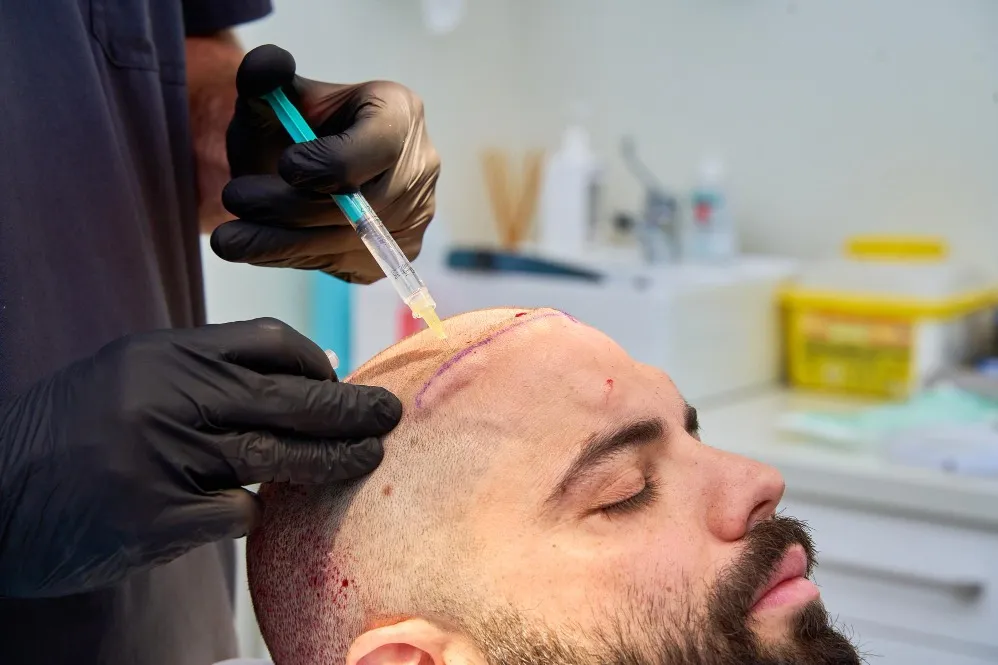
A hair transplant moves suitable hair follicles from a donor area,usually the back or sides of the scalp,to areas affected by thinning or baldness. While the idea sounds straightforward, the final appearance depends on medical assessment, donor management, graft handling and thoughtful hairline design.
For this reason, choosing the best hair transplant doctor in Nagpur should involve more than comparing graft packages or advertised prices. Patients need to understand whether they are appropriate candidates and whether transplantation will address their particular pattern of hair loss.
Dr. Richa’s Unique Clinic begins this process with an evaluation of the scalp, donor area and history of hair fall. A transplant should be planned as part of long-term hair management rather than treated as a quick cosmetic purchase.
Why Diagnosis Comes Before Transplantation
Not every form of hair loss requires surgery. Hair shedding may occur because of nutritional deficiency, thyroid dysfunction, recent illness, medication, stress or inflammatory scalp conditions. Some causes can improve with medical treatment, while others may continue progressing even after a transplant.
Before discussing graft numbers, the doctor should assess:
- The type and pattern of hair loss
- The stability of the condition
- Donor-area density and quality
- Scalp health
- Family history of baldness
- Previous medical or cosmetic treatments
- The patient’s age and expected future hair loss
Transplanting too early or without accounting for future thinning can produce an unnatural appearance later.
FUE and FUT: A Basic Comparison
Follicular unit extraction, or FUE, involves removing follicular units individually from the donor area. It leaves many tiny extraction points rather than one linear incision.
Follicular unit transplantation, or FUT, involves removing a narrow strip of donor tissue and separating it into individual follicular units. It generally leaves a linear donor scar.
Neither method is universally “best.” The choice can depend on donor characteristics, hairstyle preferences, graft requirements, previous procedures and the surgeon’s assessment. Patients should receive a clear explanation of why a particular technique is recommended.
Hairline Design Requires Long-Term Thinking
An effective hairline should suit the patient’s facial proportions, age and expected future hair loss. A very low or unusually dense hairline may look appealing in an edited preview but can consume valuable donor grafts and become difficult to maintain visually.
The donor area is limited. Once follicles are removed, they cannot simply be replaced. Conservative planning helps preserve grafts for possible future sessions.
Important Questions for the Doctor
During the consultation, patients can ask:
- What is causing my hair loss?
- Is the condition stable enough for transplantation?
- Who will design the hairline and perform each surgical step?
- How will the donor area be protected?
- What graft range is being considered?
- What are the possible complications?
- Will ongoing treatment be needed for existing hair?
- How long will visible recovery and growth take?
Temporary shedding, crusting, redness and swelling may occur after surgery. Transplanted hair commonly passes through a shedding phase before gradual growth begins, so the result is not immediate.
Recognising Unrealistic Claims
Patients should be cautious about guaranteed density, unlimited graft claims, instant results or transplant plans created without examining the scalp. Quoting solely by graft count can also be misleading if the estimate is not linked to donor safety and coverage goals.
Nagpur patients should consider the practicality of follow-up appointments as well. Early reviews allow the treatment team to check healing, guide washing and address scalp concerns. Later monitoring helps evaluate growth and manage continuing loss in untreated areas.
The right doctor will explain both the potential and the limitations of surgery. A technically sound hair transplant is built on accurate diagnosis, responsible donor use and a design that continues to look natural as the patient ages.
Keywords